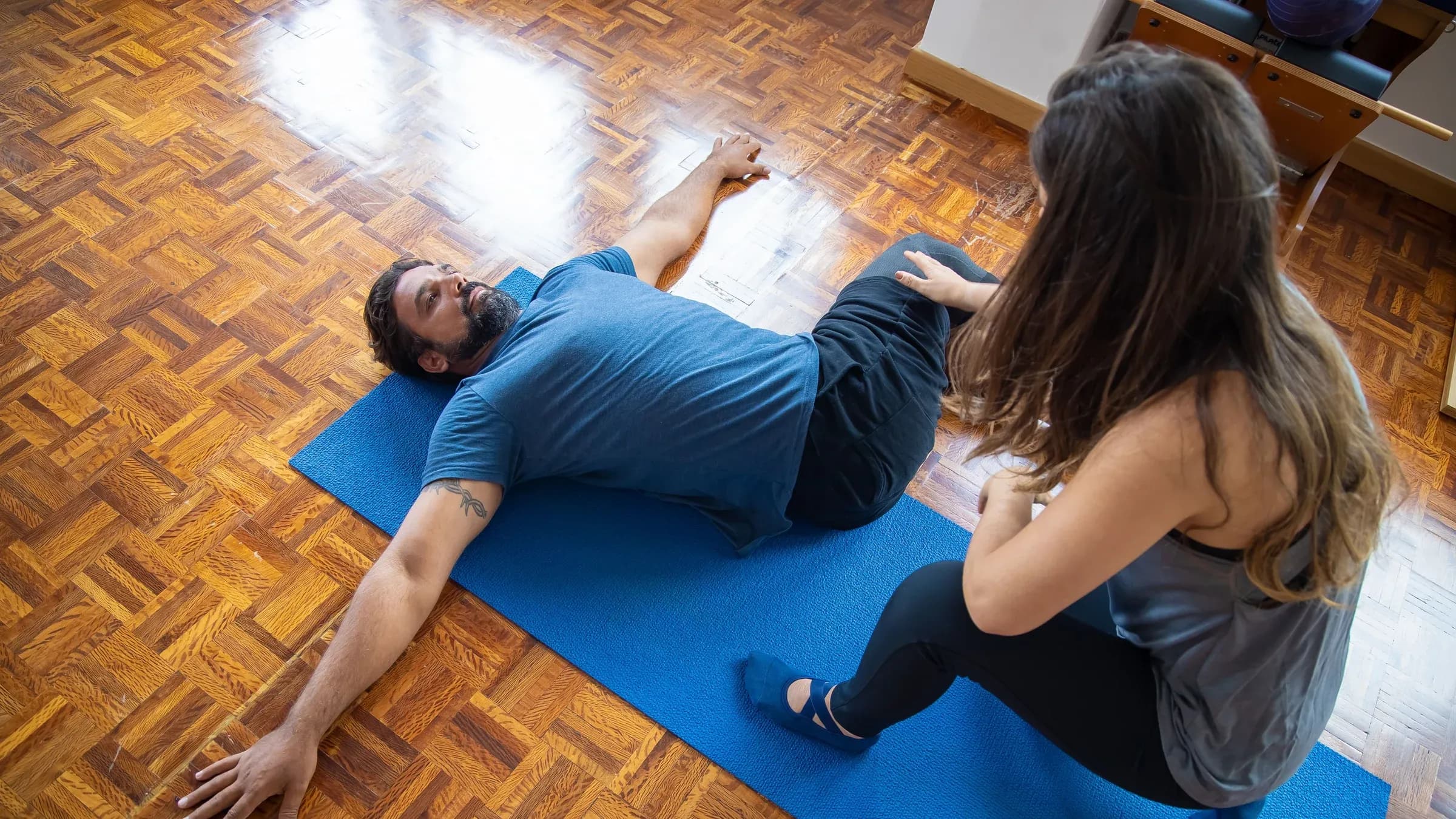
Avoid using a hard workout as a test
A demanding workout can combine load, speed, rotation, impact, fatigue, and balance. If symptoms change, it may be impossible to tell which demand was responsible. Choose a smaller, defined movement only after urgent concerns and clinician restrictions have been addressed. Pain is not the only reason to stop. Dizziness, blurred vision, unusual shortness of breath, faintness, weakness, spreading tingling, or reduced coordination can change the safety question. MedlinePlus provides general pain background, but a webpage cannot determine whether a post-crash symptom is safe to exercise through.
Do not repeat an exercise simply to prove that the first response was real. Write down the movement, load, repetitions, and timing, then discuss the result with an appropriate professional.
High-load and high-impact activity may need to wait
Heavy squats, deadlifts, overhead presses, loaded carries, sprinting, jumping, and contact sports place substantial demands on the body. When active neck, back, joint, or neurological symptoms are unexplained, adding maximal load or impact may not be a useful starting point. The same principle applies to aggressive stretching. A stretch that forces the neck or back to the end of its range can aggravate symptoms or make the response harder to interpret. Use only the range and intensity recommended for the current condition.
This is not a claim that these activities are permanently harmful. It is a reason to separate early symptom assessment from later training goals.

Match restrictions to the symptom pattern
Neck pain, low back pain, a painful shoulder, dizziness, and a suspected concussion call for different precautions. Ask which tissue or function is being protected, what movement is limited, and what would allow the restriction to change. For whiplash-related symptoms, Mayo Clinic discusses movement and exercise as part of an individualized treatment plan.
That guidance should not be turned into a universal routine or used to ignore a new warning sign. If headache, dizziness, concentration problems, balance changes, or light sensitivity raise a concussion concern, follow the evaluating clinician's instructions. The CDC describes a symptom-guided return to regular activity after mild traumatic brain injury.
Modify rather than eliminate all movement
Avoiding a particular exercise does not always mean complete inactivity. If a clinician says movement is appropriate, the plan may use a shorter duration, lighter load, supported position, smaller range, slower pace, or a different exercise that serves a similar goal. Change one variable and observe the response.
If several things change at once, a better or worse day offers little guidance about what to keep or modify. The APTA explanation of physical therapy describes how physical therapists evaluate movement and develop care plans. Other licensed professionals may also guide activity within their scope and the diagnosis involved.

Use clear criteria for returning
Before returning to a demanding activity, ask what level you should start at, what symptoms are acceptable, and what response should stop the attempt. Confirm whether the advice applies during the session, later that day, or the following morning. Keep a brief log of the activity, dose, immediate response, and recovery time. Include whether ordinary tasks such as sleep, walking, work, driving, or self-care became easier or harder afterward.
Return decisions should change when symptoms, examination findings, restrictions, or professional guidance change. A preset date is less useful than criteria tied to safety and function.
Avoid exercises that produce warning signs or exceed current restrictions, not movement for its own sake. Use an individualized progression so load, impact, range, and recovery can be adjusted one step at a time.
References
About the contributors
Editorial team
ChiropracticMatch Editorial Team
The ChiropracticMatch Editorial Team creates and maintains general educational guides about accident-related care questions, local search, appointments, and insurance conversations. ChiropracticMatch is not a healthcare provider and does not provide medical advice.